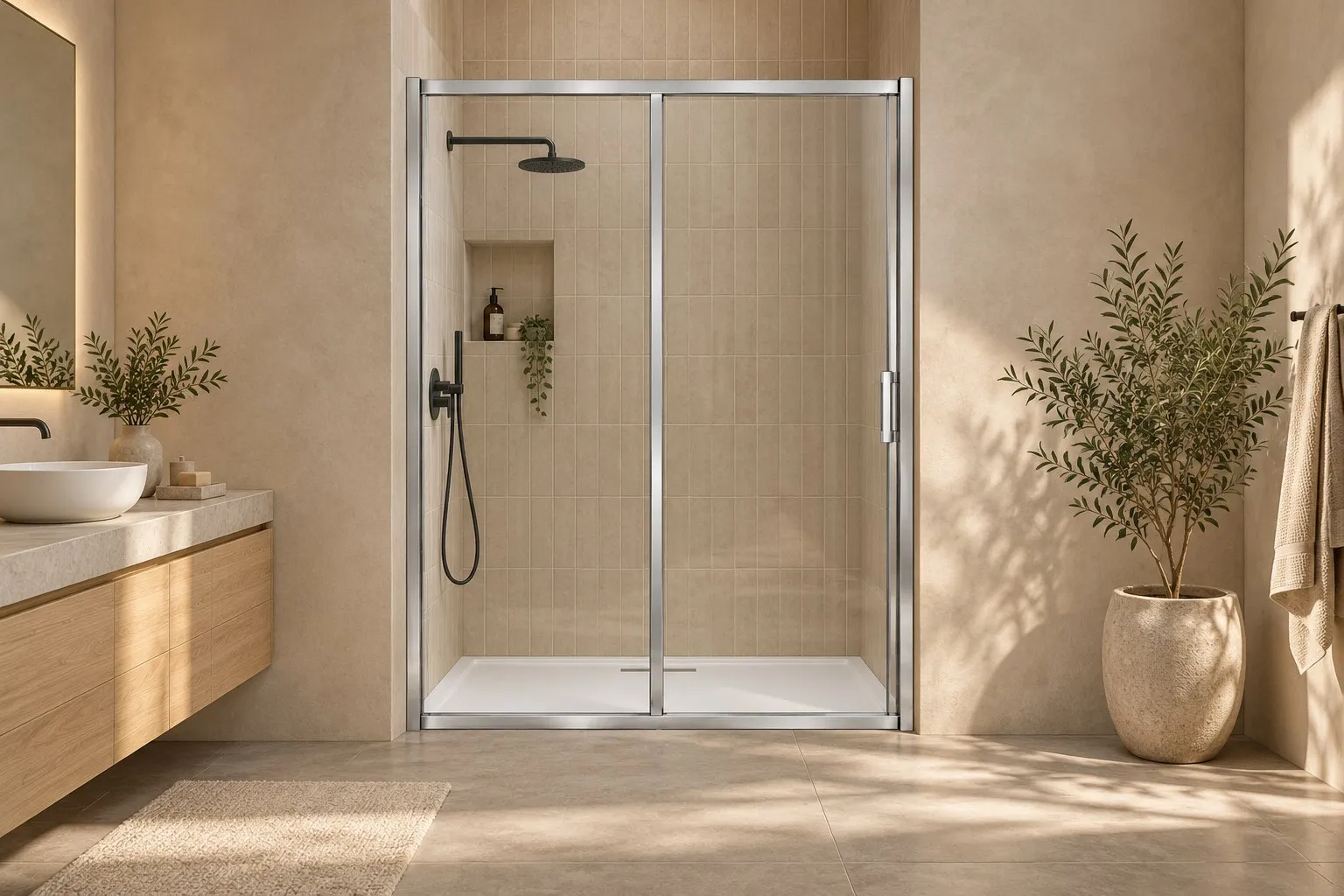
Choosing a shower door is mostly a question of space. A hinged door swings into the room and needs free space in front of it. A sliding door, such as Corsa, opens along its own axis and needs none.
When a sliding door is the right choice
- Small bathrooms, where a door opening outwards would hit the toilet, the basin or a radiator.
- Long alcoves, between two walls, where a wide opening is easier with two panels.
- Family bathrooms, where nobody wants a door swinging into the path.
Corsa has one sliding panel and one fixed panel, in 6 mm clear tempered glass, with a chrome aluminium frame and a stainless steel handle. Double rollers at the top and bottom keep the movement smooth and quiet.
Measure the opening
Corsa comes in four widths: 100, 120, 140 and 160 cm, all 200 cm high. Measure the width of the opening at the top, in the middle and at the bottom: walls are rarely perfectly straight, and the smallest measurement counts. The profiles allow ±20 mm of adjustment on each side to absorb small differences and walls that are out of plumb. Check your measurements against the technical sheet before ordering.
Building a corner shower
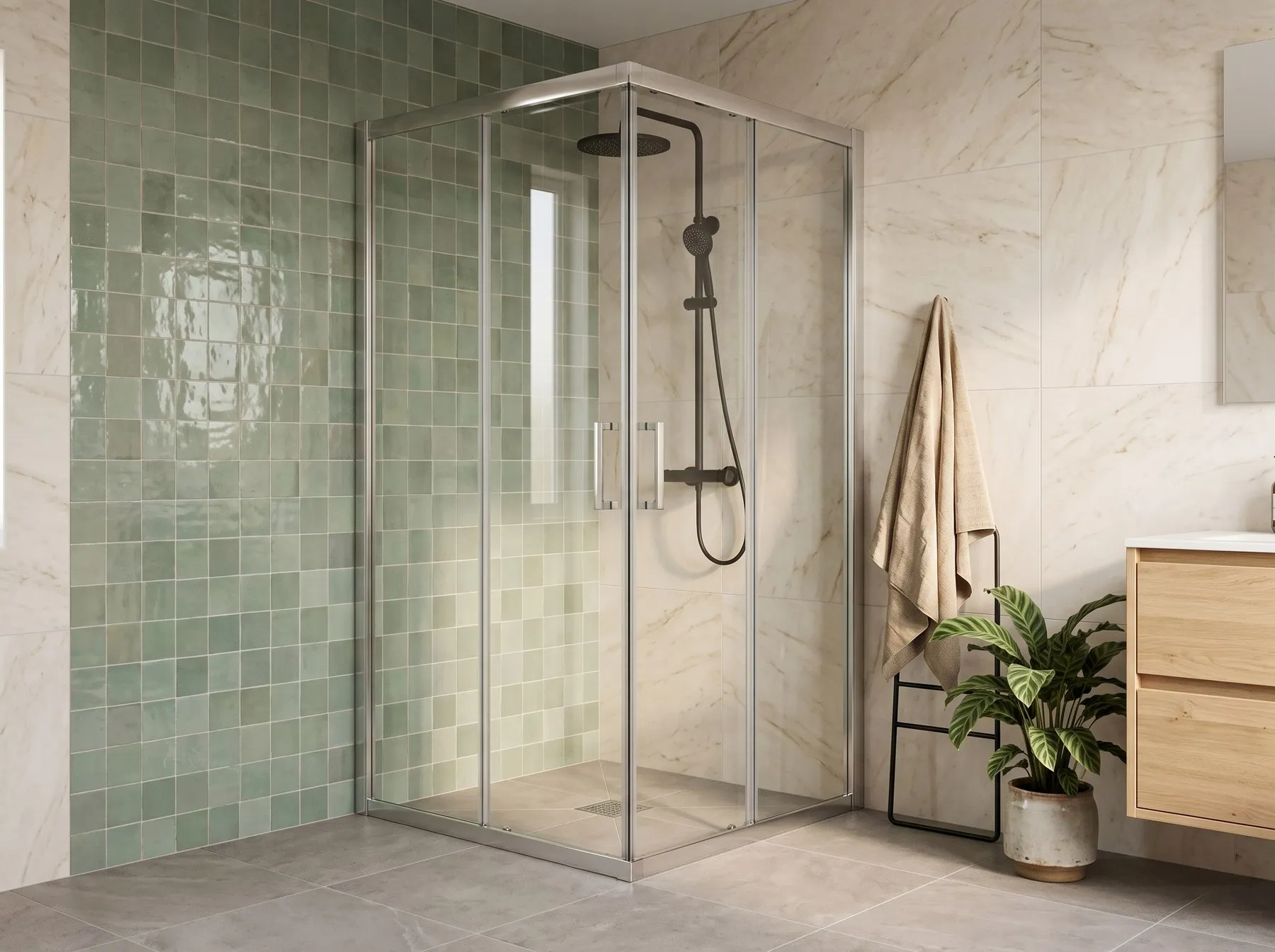
Corsa also works in a corner. Combine the door with the 80 cm side panel (ref. HGS6SF80CM): the door closes the long side, the fixed panel the short side. This creates a rectangular corner shower, for example 120 × 80 cm.
For a square corner shower, the Corsa 80 × 80 enclosure has two sliding doors that open at the corner.
Tray or tiled floor
The shower tray and the taps are not included. Corsa is installed on a tray or on a level-access tiled floor; the width of the door must match the dimensions of the tray.
Everyday care
Wipe the glass with a squeegee after each shower and clean it regularly with a mild product. Avoid abrasive products on the glass and on the chrome profiles.
More advice in our shower door buying guide.